
Garage Door Spring Replacement FAQs: Your Questions Answered
- COMMERCIAL GARAGE DOOR REPAIR
- GARAGE DOOR OPENER INSTALLATION
- GARAGE DOOR SPRING REPAIR
- SAME-DAY GARAGE DOOR REPAIR
- CUSTOM GARAGE DOOR
- GARAGE DOOR OPENER REPAIR
- GARAGE DOOR TRACK REPAIR
- GARAGE DOOR CABLE REPAIR
- GARAGE DOOR PANEL REPAIR
- LOCAL GARAGE DOOR REPAIR
- GARAGE DOOR REPLACEMENT
- NOISY GARAGE DOOR FIX
- GATE REPAIR
- GARAGE DOOR INSTALLATION
- GARAGE DOOR SECTION REPLACEMENT
- OVERHEAD GARAGE DOOR REPAIR
Garage Door Spring Replacement FAQs: Your Questions Answered
You press the wall button, hear the motor whine, but the heavy door refuses to lift more than a few inches. This frustrating scenario often points to a single culprit: a broken spring. Homeowners often overlook these metal coils until they snap, trapping cars inside the garage and disrupting daily routines. At Whitehall Garage Door Repair, we understand that a sudden mechanical failure brings stress and uncertainty. You likely have urgent questions about safety, costs, and timelines regarding garage door spring replacement. This guide addresses the most common inquiries to help you manage this repair confidently and get your door moving again.
Understanding How Garage Door Springs Function and Fail
Many people mistakenly believe the electric opener lifts the full weight of the door. In reality, the springs do the heavy lifting. The opener simply directs the movement. Your garage door system relies on these springs to counterbalance the door’s weight, which can exceed several hundred pounds. When the door lowers, the springs wind up or stretch, storing immense potential energy. When you open the door, they release that energy to lift the panels.
Springs fail primarily due to usage cycles rather than age. A standard torsion spring typically lasts for about 10,000 cycles. One cycle equals one full open and close operation. For a busy family coming and going multiple times a day, this might translate to only five to seven years of life. Environmental factors also play a significant role. Rust increases friction on the coils, while extreme cold can make the metal brittle. Eventually, the metal fatigues to the point of failure. You cannot repair a snapped spring; you must replace it to restore the counterbalance system.
How Do I Know if My Spring is Broken?
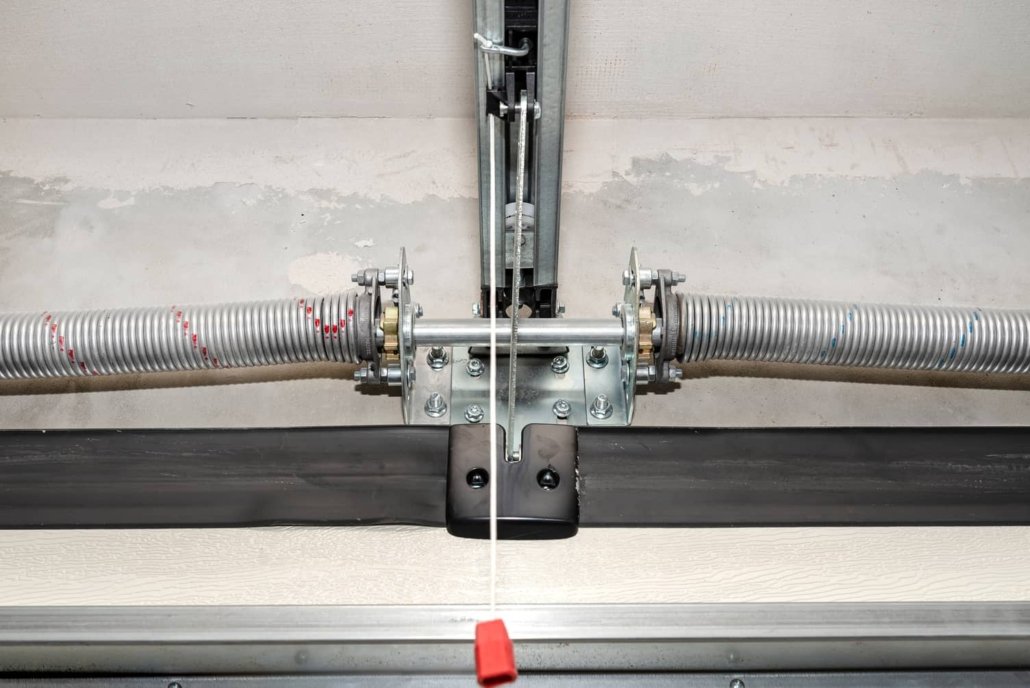
Identifying a broken spring is usually straightforward if you know what to look—and listen—for. The most obvious sign is a loud, gunshot-like bang coming from the garage. This noise occurs when the metal coil finally snaps under high tension and uncoils in a fraction of a second. If you weren’t home to hear the noise, a visual inspection offers the best confirmation. Look above the door for the torsion spring bar. A healthy spring looks like one continuous coil. A broken spring will show a visible gap of two to three inches separating the two halves of the coil.
You can also perform a physical test if the visual signs are unclear. Disconnect the electric opener by pulling the red emergency release cord while the door is closed. Attempt to lift the door manually. A properly balanced door should lift relatively easily with one hand and stay in place around waist height. If the door feels incredibly heavy or crashes to the floor when you let go, the spring no longer provides lift. Never attempt to force the door open with the electric opener in this state. The dead weight can strip the opener’s gears or burn out the motor, turning a simple spring repair into a complete system overhaul.
Is It Safe to Replace the Springs Myself?
We strongly advise homeowners against attempting this repair as a DIY project. While online tutorials may make the process look simple, working with high-tension springs involves significant danger. Torsion springs hold enough torque to lift a 300-pound wall of steel. Releasing or winding this tension requires specific tools, such as winding bars, and a firm understanding of mechanics. Makeshift tools like screwdrivers can slip from the winding cone, causing the spring to unwind instantly. This release of energy can launch tools across the room or cause severe injuries to hands and faces.
Furthermore, correct garage door spring replacement requires precise balancing. You must select the right wire size and spring length for your specific door weight. Installing the wrong spring makes the door difficult to close or causes it to fly up too fast, which poses a safety hazard to your family. Professional technicians carry various spring sizes and possess the training to balance the door perfectly. They also inspect the cables, drums, and rollers during the service call to ensure the entire system operates smoothly. Investing in professional service guarantees safety and ensures the new springs perform reliably for years to come.